


| PARTNER CONTENT |
What was once a transactional, search-and-click process is evolving into a dynamic and interactive activity fueled by engaging video content. In fact, video commerce has quadrupled over the past two years, signaling a major shift in consumer behavior that brands cannot afford to ignore.
|
1) Access to trusted creators
At the heart of successful video commerce is authenticity, which is best delivered by trusted creators. This isn't about celebrity endorsements, but about leveraging the power of relatable individuals who have spent years building loyal communities around shared passions and niche expertise.
When a creator offers an honest review or integrates a product into their content naturally, their recommendation come across more like the advice of a trusted friend versus a sales pitch. The question for brands then is where and how do they find these creators to deliver their message in away that feels natural and non-intrusive. 2) Reach across a variety of audiences and demographics If you can’t reach them, you can’t speak to them. It's Marketing 101 but it's critical for brands to be on platforms where their target user base is. Here brands must not only look for total reach numbers but dive deeper to ensure that the platform of choice reaches their specific audiences whether that is GenZ, rural, or other segments. 3) Access to highly engaged audiences Imagine this - you are sitting on your ouch with your phone in your hand after a long day at work. Your fingers start to hurt after a while and you start to realize you’ve been swiping in all directions for the past one hour. You’re not quite sure where your time went but it was fun. You’ve been doom scrolling. Most of us can relate to this behavior and while it is fun and exciting to discover new content this way, it rarely results in a purchase.
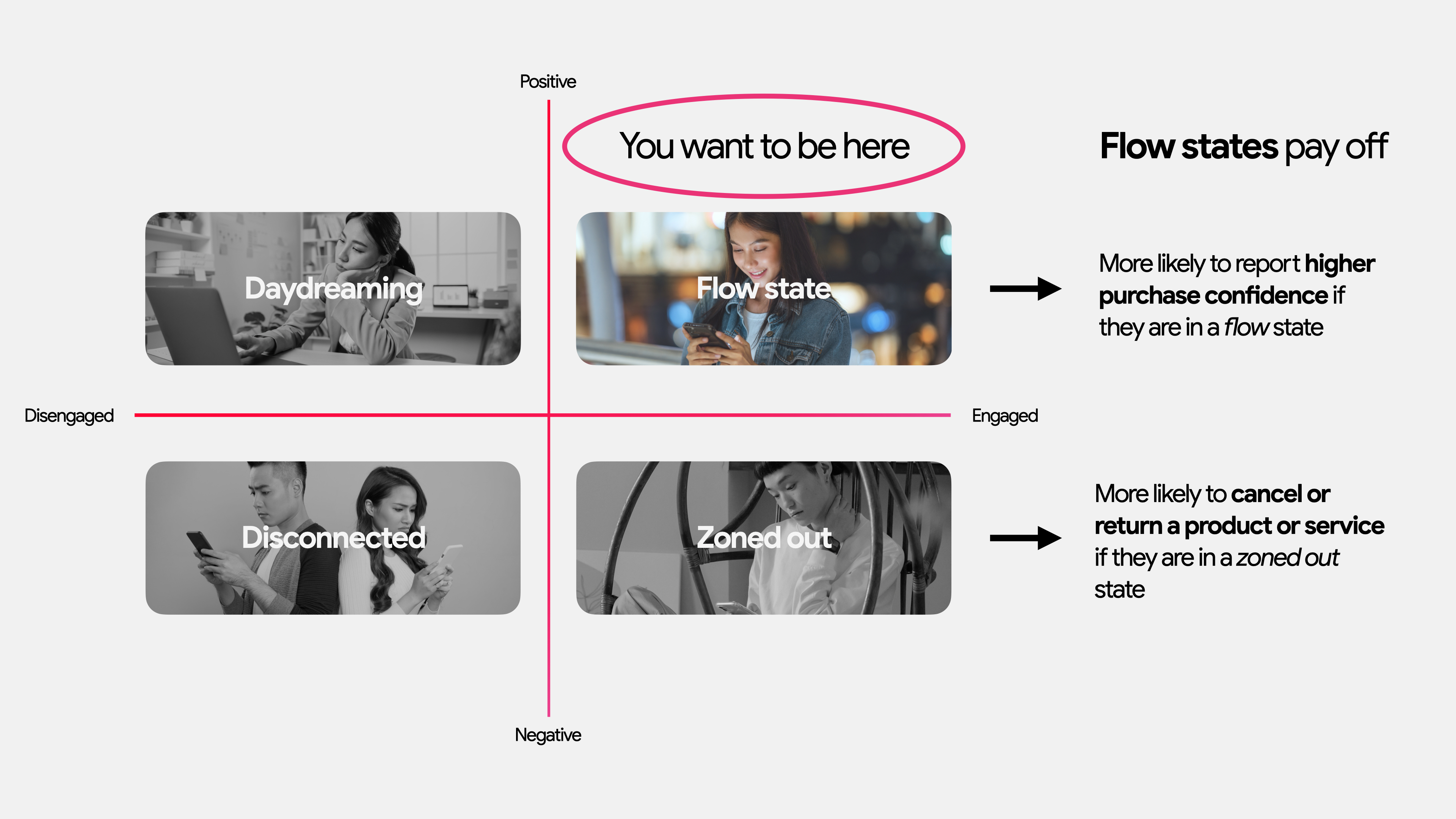
Research from Kantar confirms this. It shows that users who are in a Flow State - where they are fully present, immersed, and receptive AND feel positive about their experiences on the platform are most likely to report the highest purchase confidence. These are the users brands should aim to engage. This focus on intentional, 'lean-in' viewing is a key differentiator from platforms that primarily drive rapid, impulse-based purchases. 4) Measurable return on investment (ROI) Ultimately, every marketing investment must be justified by a tangible return, not just clicks and likes. For lower funnel campaigns or performance marketing campaigns the corelation of marketing investments to sales is easier to derive but for upper funnel campaigns, this may require using established methodologies, such as marketing mix modeling (MMM). |
An ecosystem primed for video commerce
For brands seeking a platform that marries brand-building with direct sales, YouTube presents a compelling case. Its ecosystem is uniquely positioned to help brands achieve marketing objectives from generating awareness to driving purchases.
|
When it comes to creators, SEA’s most influential voices are on YouTube. Take Mark Wiens for instance, who has been making YouTube videos of vibrant street food scenes from Bangkok to Zanzibar for the last sixteen years. Today Mark’s fanbase has surged to eleven million followers. He is widely regarded as an authority on Thai cuisine, globally. and has been featured on New York Magazine and CNN.
Mark isn’t alone. In fact, Surveys by Kantar and MTM in major SEA markets found that user trust in YouTube creators is higher than the competitive average1. And this influence exists across demographics. In Indonesia for example, 60% of GenZ users say they can trust the brands that YT Creators talk about compared to 43% on Instagram and 50% on TikTok. And this trust translates directly to sales, with over 85% of viewers across Indonesia, Thailand, and Vietnam agreeing that YouTube helps them decide what to purchase2.
YouTube also gives brands access to a wide and engaged user base.
According to a Kantar study, YouTube is the #1 video platform across SEA markets, reaching more consumers on a daily basis than all other video platforms3. And this reach extends to all several key demographics. For instance, more surveyed Gen Zs in the region watch YouTube daily than any other short-form video platform4.
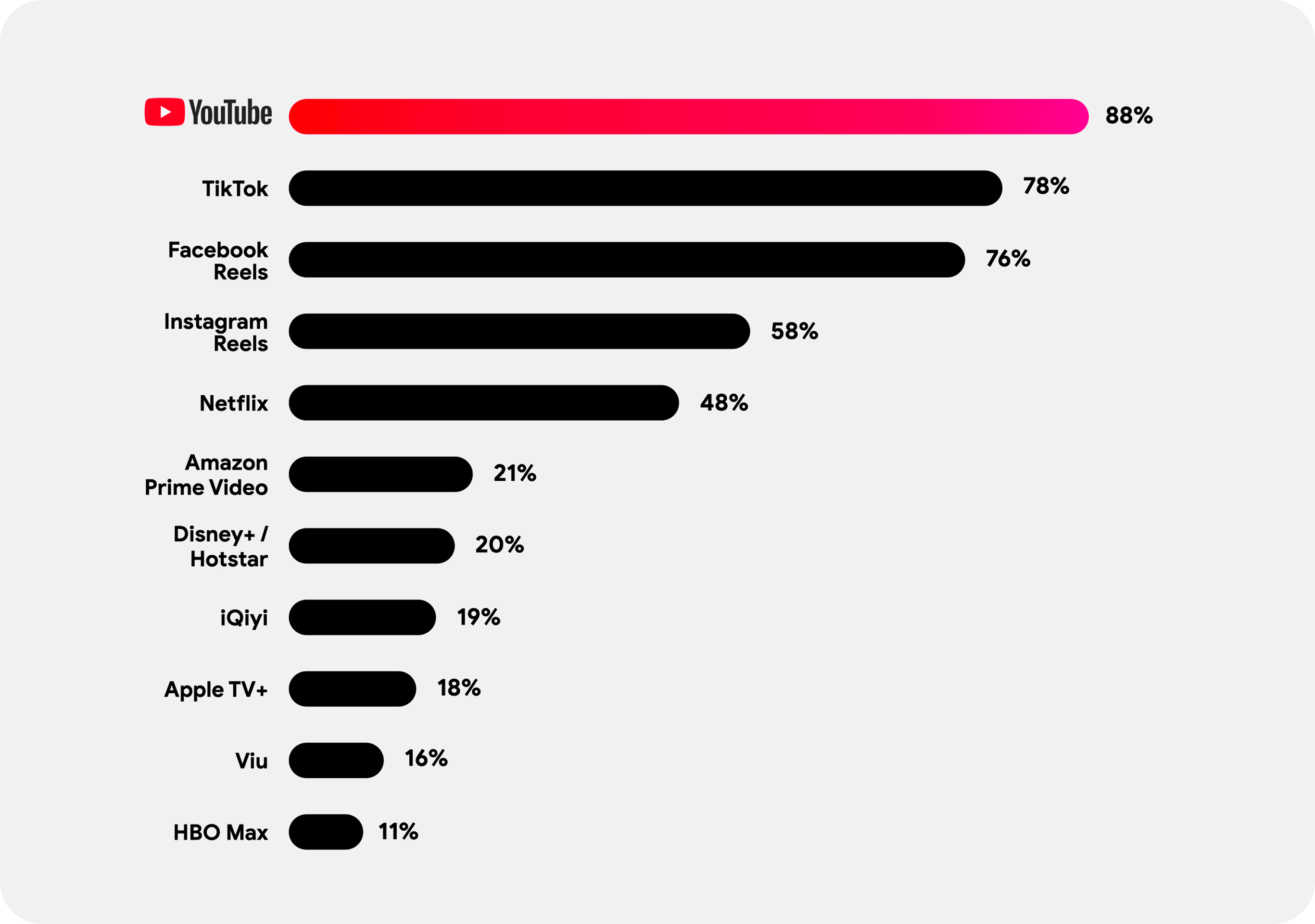
According to Kantar, YouTube is the #1 video platform in SEA.
But its not just the quantity, its also the quality. According to Kantar surveys conducted in Indonesia and Thailand, YouTube is the #1 place where users are in a flow state.
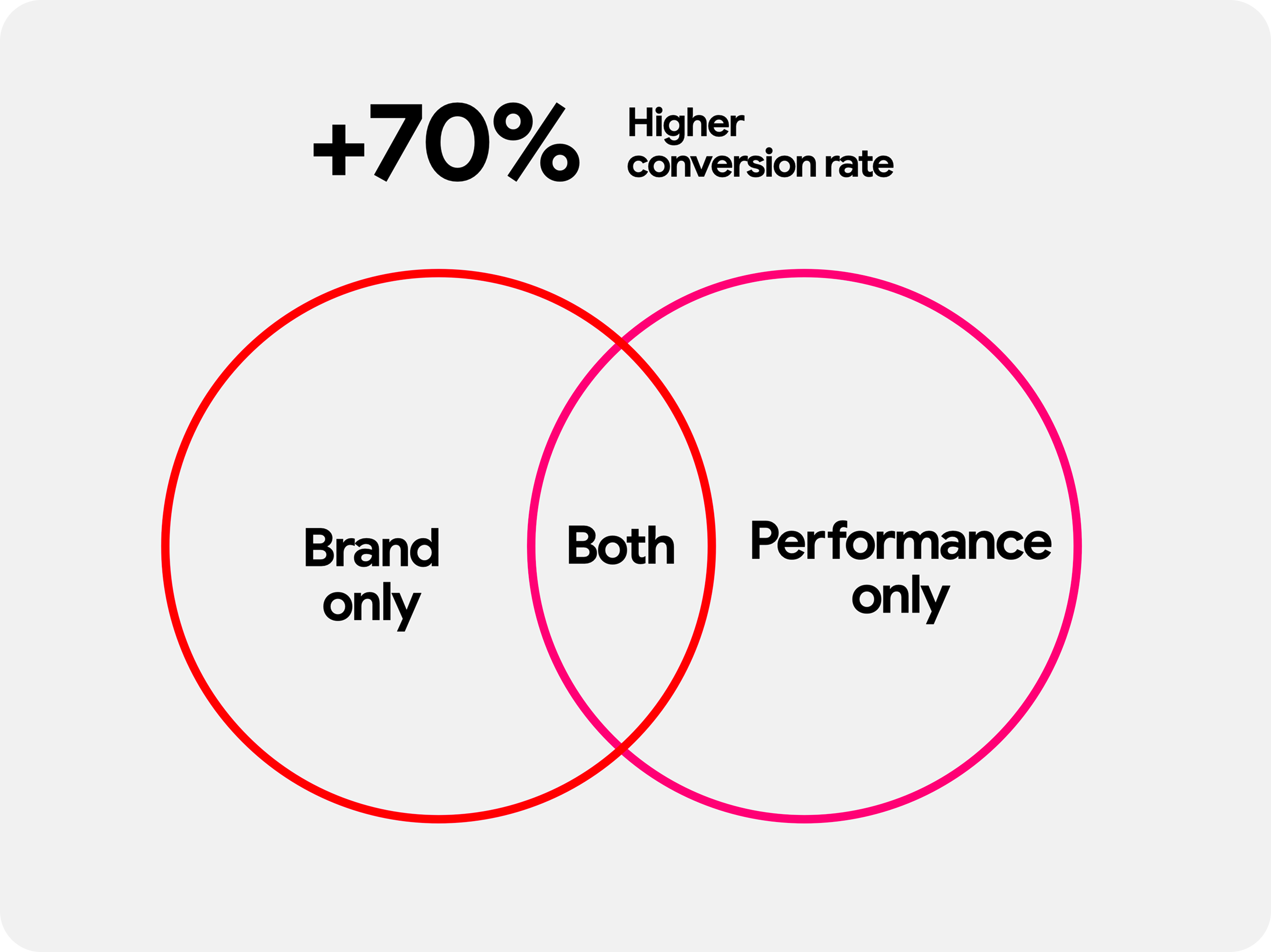
Lastly, but most crucially, are results, not just buzz but actual ROI. Meta-analyses of marketing mix models by Analytic Edge across Indonesia, Thailand, and Vietnam found that YouTube ROI was more than twice that of linear TV, and 20% to 60% higher than social video platforms5.
|
There is a high-value ecosystem users and creators that is thriving on YouTube. But how exactly do advertisers tap into this. Now its become easier. The launch of YouTube Shopping, in partnership with platforms like Shopee has helped to create a direct path from discovery to checkout. Brands can have their products tagged by creators in their videos, allowing viewers to purchase without leaving the ecosystem. L'Oréal Thailand leveraged this and saw a cost-per-visit two times lower than its other campaigns.
Case study in action: tiket.com
Indonesian online travel company tiket.com wanted to engage Gen Z with its affordable travel options. By partnering with four YouTube creators popular with this demographic, the campaign reached over 2 million unique Gen Z users in just 11 days. It also achieved a 13% engagement rate—more than double the social media average of 6%—at an 88% lower cost per view compared to other 15-second social media ads.
1 According to a survey conducted by Kantar, 90% of viewers in the Philippines agree that YouTube has the most trusted creators, outperforming the social media average (77%), which includes Facebook, Instagram, and TikTok. Source: Google/Kantar, Future of Video, n=922 YouTube viewers, n=2006 weekly video viewers 18-64 (PH), fielded from (3/13/25-4/7/25). Competitive set includes 10 market competitors: Linear TV, Netflix, Disney+, Amazon Prime Video, Viu, HBO, Facebook, Instagram, TikTok, iWantTFC. According to a survey by MTM, 86% of surveyed viewers in Indonesia and 88% of surveyed viewers in TH say that they trust the views and opinions on brands and products from creators on YouTube, which is significantly higher than the competitive average (June 2025). Source: Google/MTM, Creators, ID and TH 2025. People in ID who claim to use the following services at least once a month: n=1,010 YouTube; n=1,010 Instagram; n=965; TikTok n=904. People in TH who claim to use the following services at least once a month: n=1,000 YouTube; n=1,000 Instagram; n=878; TikTok n=928
2 Google/Kantar WhyVideo, n=994 YouTube viewers, n=2120 weekly video viewers 18-64 (ID), fielded from (3/26/24-4/5/24); n=1041 YouTube viewers, n=2222 weekly video viewers 18-64 (TH), fielded from (3/26/24-4/15/24); n=959 YouTube viewers, n=2021 weekly video viewers 18-64 (VN), fielded from (3/26/24-4/11/24)
3 Google/Kantar, APAC Breakthrough Behaviours, April 2025, online survey, n=6,004 consumers 18+, SEA (ID, VN, TH, PH). Competitive set includes YouTube, Facebook Reels, Instagram Reels, Twitter / X, TikTok, Pinterest, Kumu, WhatsApp, Telegram, Line, Viber, Zalo
4 Google/Ipsos, Global Consumer Journeys, Dec 2024, online survey, n=2,555 Gen Z online consumers aged 18-27 in ID, PH, SG, TH

.jpg&h=334&w=500&q=100&v=20250320&c=1)

.jpg&h=334&w=500&q=100&v=20250320&c=1)


.jpg&h=268&w=401&q=100&v=20250320&c=1)


